

Tralalero tralala meaning is simpler than it looks. You’ve seen the phrase online. It sounds silly. It sounds musical. It makes people smile without saying much at all. That’s the whole point. The tralalero tralala meaning is not tied to any dictionary. It’s not a real word in any language. It works like a happy sound, similar to “la-la-la.” People use it to show fun, playfulness, or light sarcasm in daily chats.
This phrase didn’t just appear overnight. It has old musical roots. It grew through memes and social media. Today, it shows up in texts, comments, and captions everywhere. Once you understand the tralalero tralala meaning, you’ll notice it everywhere online. You’ll also know exactly when to use it and when to skip it. Keep reading. We’ll break down its full origin, real chat examples, and how people use it across different platforms today.
Tralalero Tralala
Tralalero tralala is a lighthearted expression of joy or silliness. It works like “la-la-la” — a happy, musical sound rather than an actual message.
It’s a playful way to show you don’t take something seriously. There’s no deep literal meaning behind it. It’s about tone, not text.
Example uses
- “I forgot my keys again… tralalero tralala”
- “Tests are next week and I haven’t studied. Tralalero tralala!”
- “She said sorry then did it again. Tralalero tralala, I guess.”
In each case, the phrase adds a light, musical touch to a normal sentence. It turns a small problem into a joke.
Origin & Background
Early musical roots
The rhythm behind tralalero tralala isn’t new. People have used nonsense syllables like “tra-la-la” in music and poetry for centuries. Singers used these sounds to fill gaps between real lyrics or to mimic singing without words.
Think of old folk songs where a singer hums “tra-la-la” between verses. That’s the same basic idea.
European cultural influence
This style of singing comes from European languages and folk traditions, especially in Italy. Groups of singers would use rhythmic, wordless sounds as part of their performance. It wasn’t slang back then it was simply a way to add rhythm and feeling to music.
Over time, these playful sounds became linked to pretending to sing happily or mocking someone overly cheerful. That’s the seed of the modern meaning.
Internet evolution
Fast forward to today. Social media took this old musical habit and turned it into a meme. Short videos, sounds, and captions spread the phrase across TikTok, Instagram, and other apps.
Now it’s used as a playful or sarcastic reaction. People use it to joke, tease friends, or add carefree energy to a normal post. The meaning shifted from pure music to internet humor — but the playful spirit stayed the same.
Real-Life Conversations
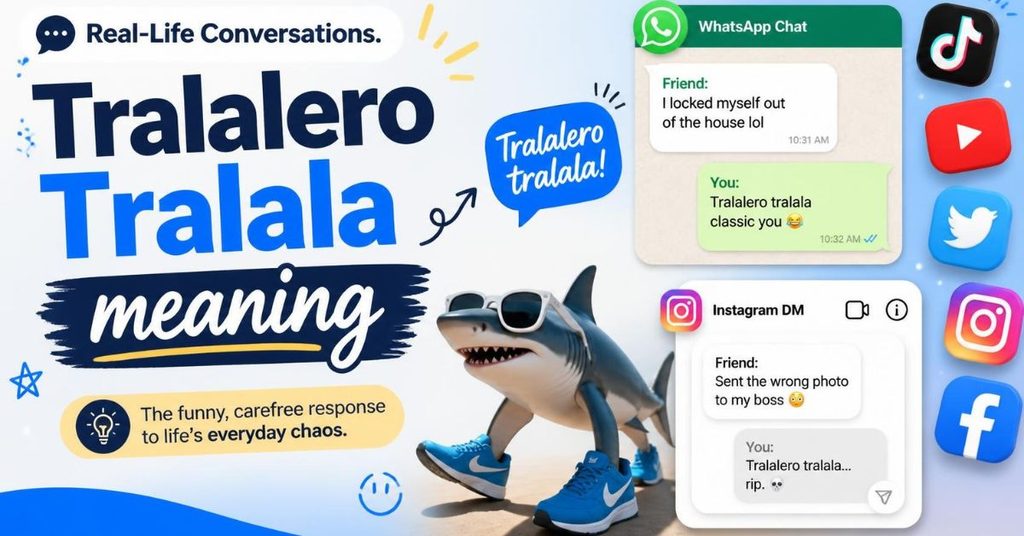
Here’s how the phrase actually shows up in daily chats.
WhatsApp Chat
Friend: I locked myself out of the house lol You: Tralalero tralala classic you
Instagram DM
Friend: Sent the wrong photo to my boss You: Tralalero tralala… rip
TikTok Comments
“The way she just walked away like nothing happened… tralalero tralala 💀”
Text Message
“Running late again, tralalero tralala, be there in 10”
In every case, it’s theatrical and funny. It softens the moment and adds humor to real-life conversations.
Emotional & Psychological Meaning
| Meaning | Explanation |
| Carefree attitude | It signals that you’re not stressed. Even when something goes wrong, saying tralalero tralala shows you’re choosing playfulness rather than seriousness. |
| Gentle sarcasm | Sometimes it’s used with gentle sarcasm. It points out something silly or annoying without being mean about it. |
| Social bonding | Using shared meme phrases builds social bonding. It’s an inside joke that friend groups repeat, which makes conversations feel closer and more fun. |
| Playful rebellion | It can also be a small act of playful rebellion, a way to shrug off rules, stress, or pressure. It says, “I know this is serious, but I’m choosing not to stress about it right now.” |
Usage in Different Contexts
The tralalero tralala definition doesn’t change much, but the feel of it shifts depending on where you use it.
Social Media
On platforms like TikTok and Instagram, it fits meme captions, comment jokes, and reaction replies. It’s short, catchy, and instantly recognizable to anyone into meme culture.
Friends & Relationships
Between friends, it’s used to tease, joke, or react to small drama. It keeps things light even during casual conversations about mistakes or awkward moments.
Work or Professional Settings
This is where you should slow down. Tralalero tralala is not meant for formal messages, emails, or client chats. It can come across as unprofessional or confusing to people outside meme culture.
Casual vs Serious Tone
| Situation | Use It? |
| Joking with friends | Yes |
| Reacting to a funny video | Yes |
| Replying to your boss | No |
| Comforting someone who’s upset | No |
Read More : OP Meaning Unlocked: Master Internet Slang 2026
Common Misunderstandings
Misunderstanding 1: It has a deep literal meaning
It doesn’t. There’s no hidden message or translation. It’s a mood, not a fact.
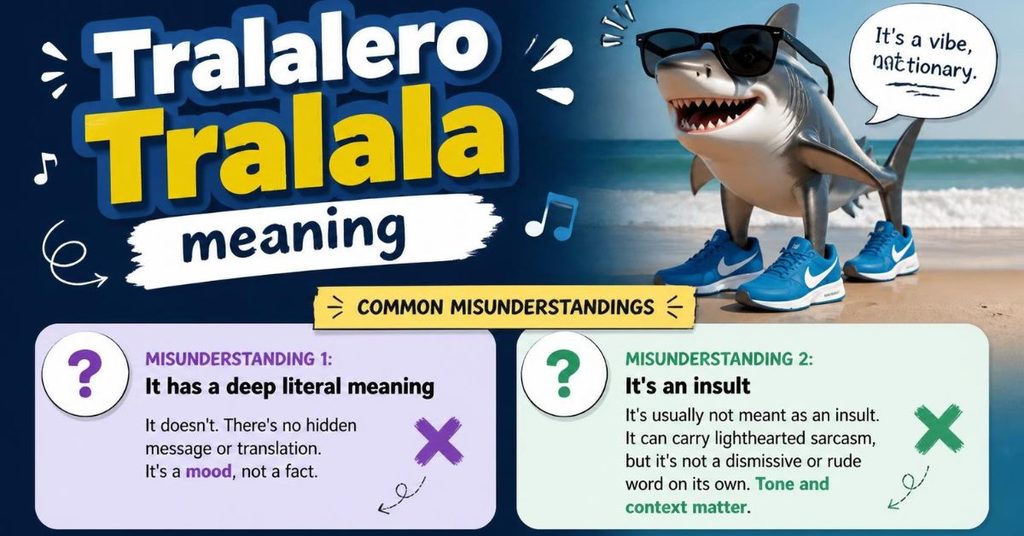
Misunderstanding 2: It’s an insult
It’s usually not meant as an insult. It can carry lighthearted sarcasm, but it’s not a dismissive or rude word on its own. Tone and context matter.
Misunderstanding 3: It’s from one specific language
While it has roots tied to European cultural influence, it’s not locked to one specific language today. Online, it belongs to internet culture more than any single country.
Situations where it shouldn’t be used
Avoid using it during:
- Serious news or tragic events
- An emotional discussion where someone needs support
- Any setting that calls for professionalism
Comparison Table
| Phrase | Meaning | Best Use |
| Tralalero tralala | Playful, musical, not serious | Jokes, funny reactions |
| Whatever | Dismissive response, “I don’t care” | Ending an argument |
| YOLO | Living freely, taking a risk | Bold or spontaneous choices |
| Never mind | Dropping the topic | Ending a conversation |
Key Insight
Tralalero tralala is musical and humorous, while phrases like “whatever” lean more toward indifference or dismissal. It’s playful, not cold.
Variations and Similar Expressions
| # | Variation | Meaning |
| 1 | Tra-la-la | The classic, simple version |
| 2 | La-la-la | Used for humming or ignoring something |
| 3 | Tralala mood | Describing a carefree day |
| 4 | Tra-la vibe | A relaxed, easygoing feeling |
| 5 | Singing tralala | Literally humming without words |
| 6 | Drama tralala | Mocking someone’s overreaction |
| 7 | Happy tralala | Pure joy or excitement |
| 8 | Meme tralala | Tied directly to viral content |
| 9 | Tralala moment | A small, funny, random event |
| 10 | Sarcastic tralala | Teasing with a hint of irony |
How to Respond When Someone Uses It
Not sure how to reply? Here are simple options based on your relationship and mood.
Casual Replies
- “Haha tralalero tralala right back at you”
- “Big mood”
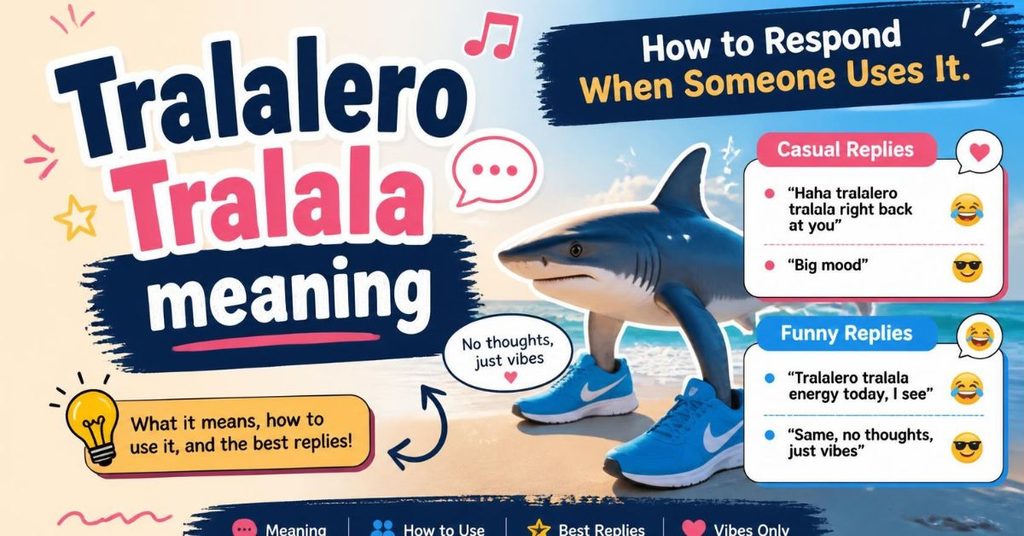
Funny Replies
- “Tralalero tralala energy today, I see”
- “Same, no thoughts, just vibes”
Mature or Confident Replies
- “Ha, fair enough.”
- “I hear you, let’s just move past it.”
Private or Respectful Replies
If it’s with someone you don’t know well, keep it short:
- “Haha okay”
- A simple laughing emoji works fine too
Regional & Cultural Usage
| Region | How It’s Used |
| Western Culture | In the US and Europe, it’s mostly a fun meme term used in casual conversations and comment sections. |
| Asian Culture | Across Asian social platforms, similar wordless, musical sounds have long been used in songs and casual chat, so the idea feels familiar even with a new phrase attached. |
| Middle Eastern Culture | Online users in the Middle East mostly pick it up through global internet usage, using it the same playful way as everyone else on TikTok and Instagram. |
| Global Internet Usage | At its core, tralalero tralala is a global comedic filler and meme expression. It doesn’t belong to one country. It belongs to the internet. |
Frequently Asked Questions (FAQs)
What does “tralalero tralala” mean?
It’s a playful, musical phrase used to show carefree happiness, teasing humor, or mock singing. It’s not literal, it’s about tone and mood.
Is tralalero tralala a real word?
No. It’s not a dictionary word. It’s an internet meme phrase built from musical, nonsense syllables.
Where did tralalero tralala come from?
Its rhythm comes from old musical traditions using tra-la-la and la-la-la sounds. Social media later turned it into a modern meme phrase.
Is tralalero tralala slang?
Yes, it works as internet slang, a fun, informal way to react to something without using real words.
Can tralalero tralala be rude?
It’s not naturally rude, but tone matters. Used the wrong way, in the wrong moment, it can feel dismissive. Used with friends, it’s just a joke.
Why do people say tralala in songs?
Because it’s easy to sing and doesn’t need real lyrics. Tralala in songs works as a filler sound that adds rhythm, joy, or emotion without words getting in the way.
Conclusion
Tralalero tralala meaning is simple once you break it down. It’s not a real word. It’s not in any dictionary. It’s a playful, musical sound people use online. Think of it like “la-la-la.” It shows fun, silliness, or light sarcasm. People use it in texts, memes, and comments. It helps turn small problems into jokes. That’s the heart of tralalero tralala meaning.
Knowing the tralalero tralala meaning helps you use it the right way. Use it with friends. Use it in casual chats. Skip it in serious talks or work emails. Tone matters more than words. This phrase is all about mood, not message. It’s part of meme culture, born from old musical habits and grown by social media. Understanding tralalero tralala meaning helps you join the fun without confusion. Now you know exactly what it means and how to use it.

Welcome to okayjournel! I’m James Henry an AI powered SEO, and Content Writer with 5 years of experiences.I help websites rank higher, grow traffic, and look amazing. My goal is to make SEO and web design simple and effective for everyone. Let’s achieve more together!
2 thoughts on “Tralalero Tralala Meaning Unlocked: Master Internet Slang 2026”